
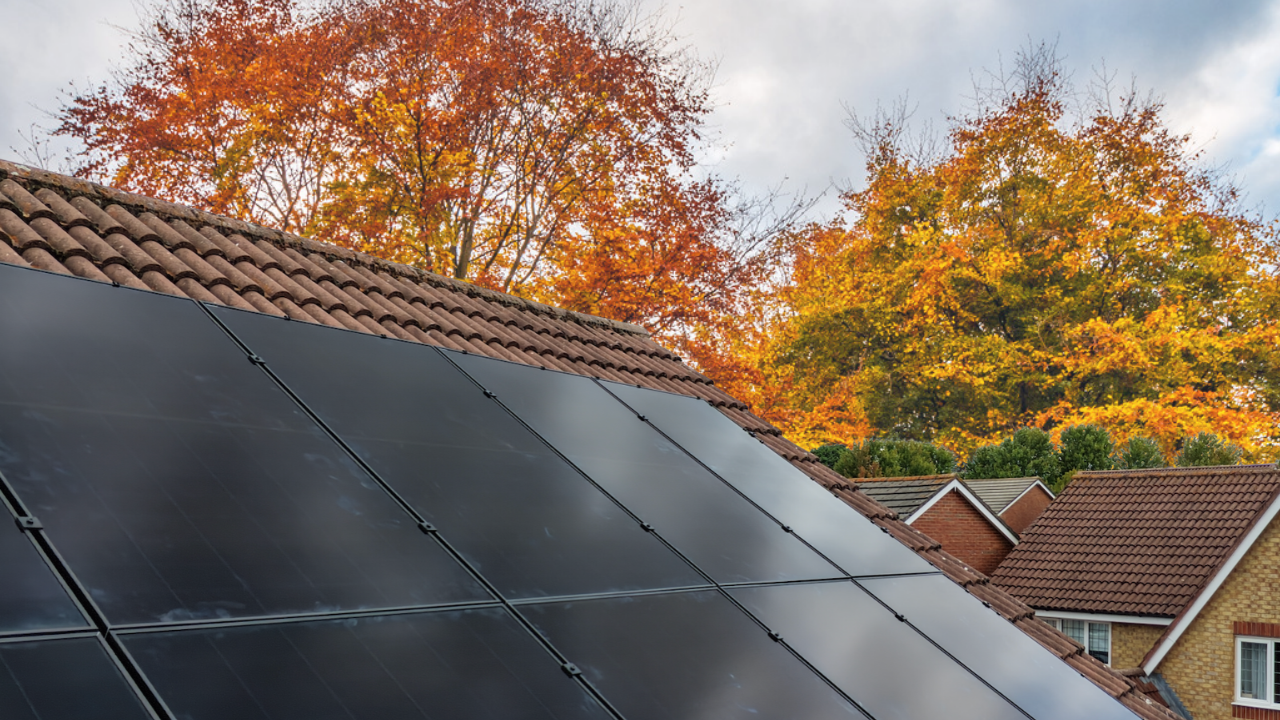
A Guide to Solar Panels in Autumn
Find out how solar panels perform in autumn, how rain and falling leaves affect generation, and how to maximise your solar energy in the colder months
The clocks are going back, and you’ve probably started to put your heating on. But what does all of this mean for your solar panels? If you’re wondering whether they’re still worth having when the days get shorter and the weather isn’t quite as sunny, the good news is that solar panels can still generate electricity throughout autumn.
Although they won’t be producing quite as much as they did through summer, there’s no need to think that they won’t still produce electricity for your home. In fact, here’s everything you need to know about getting the most out of solar energy this autumn.
Do Solar Panels Work Well in Autumn?
Absolutely! Solar panels work throughout autumn, even when the weather is cooler and the days are shorter.
Solar panels generate electricity from daylight rather than relying completely on direct sunshine. This means that even on a cloudy, drizzly day, they can still produce energy. As we all know, autumn has shorter daylight hours, which does mean there’s less time for your panels to generate electricity. However, they can still help to power your home and potentially lower your energy bills.
Thinking about making the switch to solar? Book your free solar consultation and find out how solar panels could work for your home throughout the year.
How Much Energy Do Solar Panels Produce in Autumn?
There isn’t one simple answer, as solar generation depends on several factors. Take a look below:
Daylight hours: As the days get shorter, your panels will have less time to generate electricity.
Cloud cover: Bright, clear days are great for solar generation, but your panels can still produce electricity even when it’s overcast.
Temperature: Feeling chilly? Surprisingly, cooler weather can actually be pretty beneficial for solar panel efficiency. Solar panels tend to operate more efficiently in cooler conditions compared to excessive heat.
Panel position: The direction and angle of your panels also matter; any shading from nearby trees or buildings can all affect how much electricity your panels produce.
There are other factors, too. Such as your system size, energy usage, roof orientation, etc. So, while you might notice a slight drop in generation compared to summer, your panels can still make a very useful contribution to your household electricity needs.
What Happens to Solar Panels when the Leaves Start Falling?
Although autumn leaves look pretty on the trees, they’re not quite as welcome when they start collecting around your solar panels.
A build-up of leaves, twigs and other debris can shade parts of your panels, potentially reducing their output. Thankfully, though, solar panels generally need very little maintenance. Rain can wash away some surface dirt, and many panels will stay relatively clean without much intervention.
If you do notice a significant build-up of leaves or debris, it’s worth getting advice from a professional about the safest way to deal with it. Avoid climbing onto your roof or attempting to clean panels yourself, as this can be dangerous.
Want to know how much your roof could generate? Get in touch to book your free solar consultation, and we’ll help you explore your options.
Does Rain Affect Solar Panel Performance?
Living in the UK, we’re certainly used to a bit of rain! And if you’re thinking of investing in solar, you might have wondered whether our famously changeable weather will get in the way. Rainy and overcast conditions can slightly reduce solar electricity generation because less light reaches your panels. However, they don’t stop your system from generating altogether. Your panels can still generate electricity from the daylight available.
There’s a small silver lining, too. Rainfall can help wash away dust and light surface dirt, keeping your panels cleaner. Of course, rain won’t necessarily remove everything, and heavy build-ups or accumulated leaves may need attention from a professional. Overall, though, a few rainy autumn days are nothing to worry about.
How to Get the Most from Your Solar Panels in Autumn
We’ve listed a few simple habits that can help you make better use of the electricity your panels generate.
Keep an eye on your panels. Check your solar monitoring app to see how much electricity your system is producing and spot any unexpected changes.
Use more electricity during daylight hours. Where possible, try using the washing machine, dishwasher, or other appliances during the day when your panels are generating electricity.
Make the most of battery storage. If you have a solar battery, you can store surplus electricity for later, such as when you’re cooking dinner, turning on the lights or popping on the heating.
Small changes to your daily routine can help you use more of your own solar electricity instead of buying as much from the grid.
Is Autumn a Good Time to Install Solar Panels?
It’s easy to assume that spring or summer is the best time to go solar, but there’s no need to wait for warmer weather. In fact, installing solar panels in autumn or winter means you can start generating your own electricity straight away, rather than missing out on potential savings while you wait for spring to come around. You’ll also have time to get familiar with your system before the longer, brighter days arrive.
Your actual savings will, of course, depend on factors such as your home’s electricity use, your roof, system size and the amount of electricity you use. However, solar panels can be a worthwhile investment throughout the year, not just in summer.
Ready to see if solar is right for your home? Book your free solar consultation today.
Make the Most of Solar This Autumn
Shorter days and changeable weather might mean slightly lower solar generation than in summer, but your panels can still help to power your home, lower your bills and reduce your reliance on grid electricity.
With a few very simple changes and the right system for your home, autumn is a great time to start making the most of solar energy. Get in touch today to book your free solar consultation and take the first step towards a more energy-efficient home.