
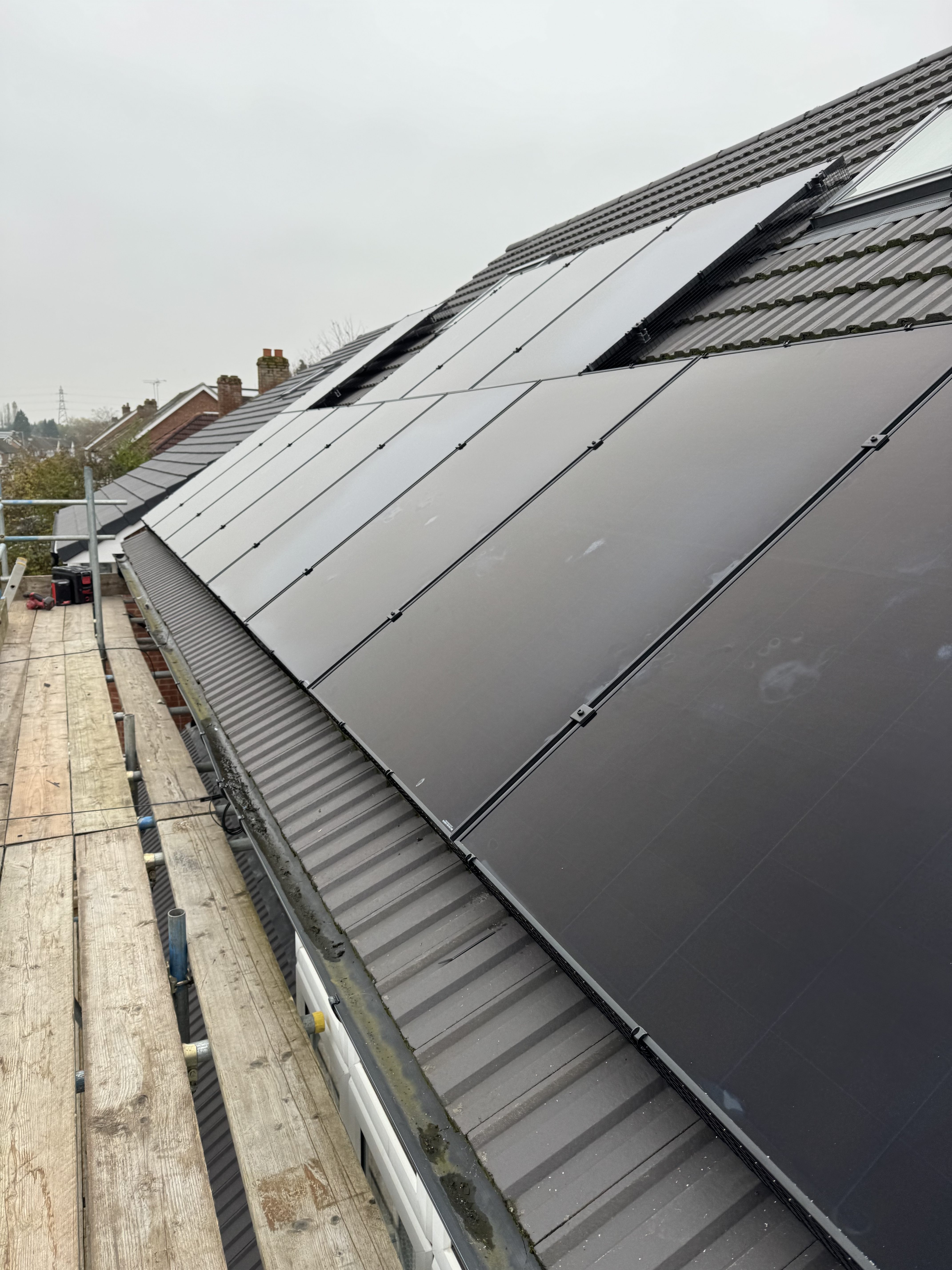
Solar and battery: how it actually works.
Solar plus a battery shifts your generation through the day so you use it when you actually need it. The result is a much higher share of self-consumed energy, real resilience during outages, and a system that pairs well with modern time-of-use tariffs.
Solar plus a battery shifts your generation through the day so you use it when you actually need it. The result is a much higher share of self-consumed energy, real resilience during outages, and a system that pairs well with modern time-of-use tariffs.
What the battery actually does
Solar generates most of its energy in the middle of the day. Most households use most of their energy in the morning and evening. Without a battery, the mismatch means you export a lot of midday energy back to the grid for a modest export rate and then buy expensive evening energy from the grid at a higher rate. A battery closes that gap by storing the midday surplus and releasing it after dark.
Self-consumption: the number that matters
Self-consumption is the percentage of what your panels generate that you actually use at home. A solar-only system on a typical UK home self-consumes somewhere between a quarter and a third. Add a properly sized battery and that climbs to roughly two-thirds, sometimes more. That shift is most of the financial story.
Time-of-use tariffs
Modern tariffs charge less for overnight electricity and more during peak hours. A battery plays nicely with that: it can charge cheap from the grid overnight, top up from solar in the day, and discharge during peak evening hours when grid energy is most expensive. For many homes the combination of solar, battery and a time-of-use tariff is the strongest setup available.
Resilience during a power cut
Most home battery systems include a backup mode that keeps essential circuits running during a grid outage. That is not a like-for-like replacement for a generator, but for the kind of outages UK homes typically see, it is the difference between "the lights stayed on" and "we found the candles."
How we size your battery
Battery sizing is not "bigger is better." Too small and you run out by 8pm. Too large and you never fill it up, so you are paying for capacity you cannot use. We size against your actual usage pattern, your tariff, and how much solar your roof will generate on a realistic day. The answer is different for a four-bed family with an EV than it is for a two-person household working from home.
What you control through the app
Generation, consumption, battery state of charge, what is going to grid and what is coming from grid, all in one place on your phone. Most homeowners check it daily for the first two weeks and then forget it exists because the system runs itself.